Learning how to calculate chronological age manually is a valuable skill for educators, healthcare professionals, and anyone who needs to determine precise age without relying on digital tools. While a chronological age calculator can provide instant results, understanding the manual calculation process gives you deeper insight into how age is measured and ensures you can verify automated results when necessary. This step-by-step guide walks you through the complete formula for calculating chronological age by hand.
The chronological age formula is fundamentally a calendar subtraction problem. You begin with two dates: the date of birth and the reference date, which could be today’s date or the date of a specific assessment. The goal is to find the exact difference between these two dates, expressed in years, months, and days. This requires careful attention to the varying lengths of months and the occasional extra day in leap years.

To start calculating chronological age manually, write both dates in the same format: year, month, and day. Place the reference date on top and the birth date below it. Begin by subtracting the birth year from the reference year. This gives you a preliminary year count. Next, subtract the birth month from the reference month. If the result is negative, add 12 to the month difference and reduce the year count by one. This borrowing step is essential because it accounts for the fact that you have not yet completed a full additional year.
The day subtraction follows the same borrowing principle but requires more attention because different months have different numbers of days. Subtract the birth day from the reference day. If the reference day is smaller than the birth day, you must borrow days from the previous month. To do this, determine how many days were in the month before the reference month, add that number to the reference day, and then subtract the birth day. When you borrow from the month, reduce the month count by one. If the month count becomes negative after this borrowing, you must borrow from the year as well.
Let us work through a practical example to illustrate the chronological age formula. Suppose a child was born on March 15, 2015, and you need to calculate their age on September 10, 2026. Start with the years: 2026 minus 2015 equals 11 years. Next, the months: September is month 9 and March is month 3, so 9 minus 3 equals 6 months. For the days: 10 minus 15 equals negative 5, so you need to borrow. August has 31 days, so add 31 to 10, giving you 41. Now subtract 15 from 41, which equals 26 days. Since you borrowed from the month, reduce the month count from 6 to 5. The final chronological age is 11 years, 5 months, and 26 days.
Leap years add an extra layer of complexity to manual chronological age calculation. When February 29 is involved, you must confirm whether each year in your calculation range is a leap year. A year is a leap year if it is divisible by 4, except for years divisible by 100 unless they are also divisible by 400. For example, 2024 is a leap year, but 1900 is not. If someone was born on February 29, 2020, and you are calculating chronological age on March 1, 2026, the calculation must account for the fact that 2026 is not a leap year. The result would be 6 years and 1 day.
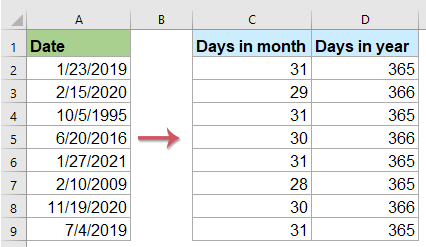
Common errors in manual chronological age calculation usually occur during the borrowing process. Many people forget to reduce the month or year count after borrowing, leading to incorrect results. Others struggle with determining how many days to borrow because they do not remember how many days are in each month. Using the knuckle method, where months on knuckles have 31 days and months between knuckles have 30 days (with February as the exception), can help you remember month lengths quickly.
For professionals who calculate chronological age regularly, developing a systematic approach reduces errors significantly. Always write dates in the same order, use a consistent borrowing notation, and double-check your work by recalculating from the birth date forward to see if you arrive at the reference date. This verification step catches most calculation mistakes before they cause problems in official documentation.
While manual calculation builds valuable skills, most professionals today use a chronological age calculator for routine work. Digital tools eliminate human error, handle leap years automatically, and produce results in standardized formats suitable for reports and records. However, understanding the underlying formula remains essential for interpreting results correctly and troubleshooting when automated tools produce unexpected outputs.
Different cultures have developed unique approaches to age calculation. In some East Asian traditions, a person is considered one year old at birth, with age increasing at the Lunar New Year rather than on the individual’s birthday. This traditional age counting system produces ages that differ from Western chronological age by one or two years. When comparing ages across cultures, understanding these different systems is essential for accurate interpretation.
The mathematical precision of chronological age calculation has implications for data science and demographics. Population studies, actuarial science, and epidemiological research all depend on accurate age data. Demographers use chronological age to construct life tables, calculate mortality rates, and project population trends. Even small systematic errors in age calculation can propagate through statistical models, leading to inaccurate projections and misguided policy decisions. For programmers implementing age calculation in software, careful attention to edge cases like February 29 and varying month lengths ensures reliable results across all scenarios.
In summary, calculating chronological age manually requires careful date subtraction with borrowing rules for months and days. Practice with various date combinations, including leap year birthdays and year-end boundaries, to build confidence and accuracy. Whether you calculate by hand or use a digital tool, the chronological age formula remains the foundation of precise age determination.