Site size should not be the only answer to a gravel calculator square feet search. When purchasing gravel, there is a change in volume of material depending on depth. This guide is a conversion of surface area into cubic feet, cubic yards and estimated tons. Plan a garden, pathway, patio, driveway or any other landscaping area using the formulas, coverage table and the five examples without mixing up between area and volume.
Featured Answer: How Much Gravel Do You Need?
Multiply square feet by gravel depth in feet to obtain cubic feet. Divide by 27 for cubic yards. Estimate weight by multiplying cubic yards by the supplier’s tons-per-yard density. Square footage alone cannot determine quantity because the same surface needs twice as much gravel at four inches deep as at two inches.
Understand Area, Volume, and Gravel Depth
Square Feet and Surface Area
Square feet measure two-dimensional surface area. For a rectangle, multiply length by width. A space 10 feet long and 5 feet wide covers 50 square feet. Surface area describes the gravel footprint, not the quantity filling it.
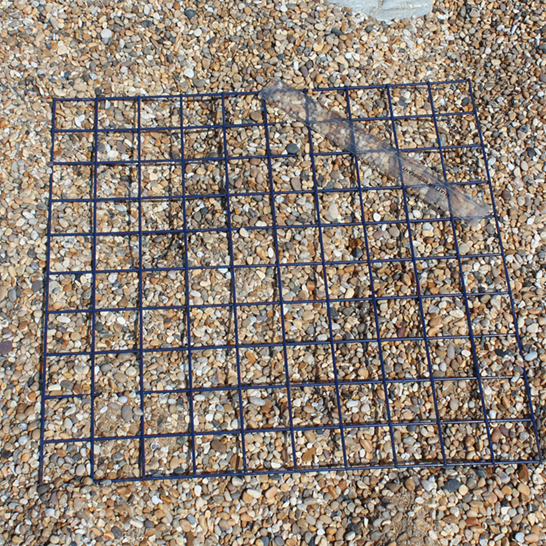
Figure 1. A square sampling frame and ruler define a measured gravel surface before volume is calculated.
Cubic Feet, Cubic Yards, and Material Volume
Three-dimensional volume of a material comes by cubic feet length, width and depth. The purchasing units of cubic yards are larger; one cubic yard is 27 cubic feet. The conversion of square feet to cubic yards of gravel needs to be deep. One of the common prices dictated by suppliers is bulk gravel which is quoted by cubic yard or ton.
Gravel Depth
Finished left-right vertical thickness is called gravel depth. Divide inches by 12 to get a distance in feet. Measure a few spots since there are variations due to soil, edging, and compaction. In layered driveways work out the courses at the base and the surface separately.
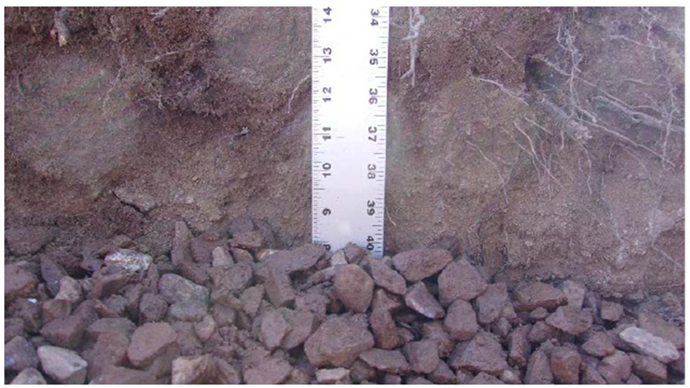
Figure 2. A vertical ruler checks the installed depth of drainage gravel in an excavated pit.
Gravel Calculator Formulas
Use these beginner-friendly formulas in order:
| Surface area in square feet equals length in feet multiplied by width in feet. |
| Depth in feet equals depth in inches divided by 12. |
| Cubic feet of gravel equals square feet multiplied by depth in feet. |
| Cubic yards equals cubic feet divided by 27. |
| Estimated tons equals cubic yards multiplied by product density. |
A gravel depth calculator automates these steps, while a gravel coverage calculator can show how much area a known volume covers. For irregular shapes, split the site into rectangles, triangles, or circles and add their areas.
Gravel Coverage Table by Depth
The table shows gravel per square foot scaled to 100 square feet. Tons assume 1.40 tons per cubic yard; confirm the actual density with your supplier.
| Depth | Cubic feet | Cubic yards | Estimated tons |
| 1 inch | 8.33 | 0.31 | 0.43 |
| 2 inches | 16.67 | 0.62 | 0.86 |
| 3 inches | 25.00 | 0.93 | 1.30 |
| 4 inches | 33.33 | 1.23 | 1.73 |
| 6 inches | 50.00 | 1.85 | 2.59 |
Five Worked Gravel Examples
1. 50-Square-Foot Garden at 2 Inches
Depth is 2 divided by 12, or 0.1667 feet. Multiply 50 by 0.1667 to get 8.33 cubic feet. Divide by 27 for 0.31 cubic yard. At 1.40 tons per yard, weight is 0.43 ton. With 10% extra, plan 0.34 yard or 0.48 ton.
2. 100-Square-Foot Pathway at 3 Inches
Three inches equals 0.25 foot. Multiply 100 by 0.25 for 25 cubic feet, then divide by 27 for 0.93 cubic yard. Estimated weight is 1.30 tons. Including 10% gives 1.02 cubic yards or 1.43 tons.
3. 250-Square-Foot Patio at 3 Inches
Multiply 250 by 0.25 to obtain 62.50 cubic feet. Dividing by 27 produces 2.31 cubic yards. Weight is 3.24 tons. After a 10% allowance, plan 2.55 cubic yards or 3.56 tons.
4. 500-Square-Foot Driveway at 4 Inches
Four inches equals one-third foot. Multiply 500 by one-third for 166.67 cubic feet, or 6.17 cubic yards. Weight is 8.64 tons. Adding 10% produces 6.79 cubic yards or 9.51 tons. Calculate any sub-base separately.
5. 1,000-Square-Foot Landscaping Area at 2 Inches
Multiply 1,000 by 0.1667 to get 166.67 cubic feet. That equals 6.17 cubic yards and 8.64 tons. With 10% extra, plan 6.79 cubic yards or 9.51 tons. This matches the driveway volume because half the depth offsets twice the area.
How to Use a Gravel Calculator
Enter length and width, square feet, choose compacted depth, and density of the supplier. Check review findings and then place an order. A gravel calculator cubic yards answer is consistent with volume pricing; it is the dependent of the density of the product in how many tons of gravel do I need. Grading, compaction, and handling: add 5 percent to 10 percent, or more, to an irregular surface.
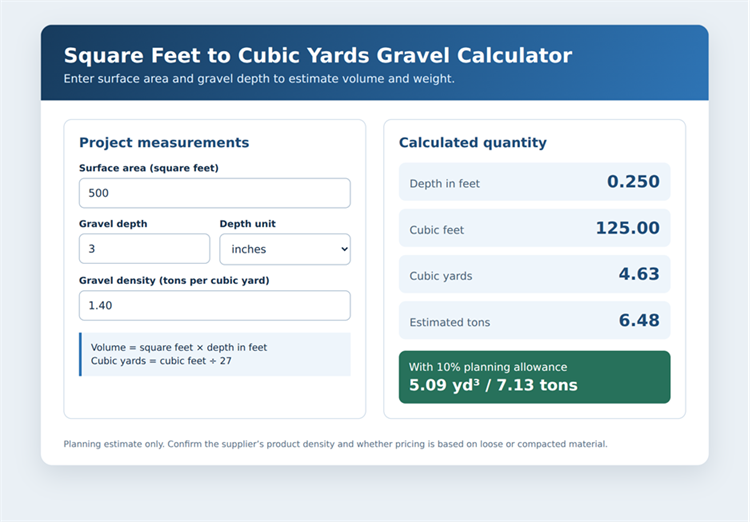
Figure 3. A functioning conversion calculator turns surface area and depth into cubic feet, cubic yards, and estimated tons.
Frequently Asked Questions
Can square footage alone determine gravel quantity?
No. Square footage measures surface area only. You must also know depth to calculate material volume.
How much gravel per square foot is needed?
At one inch deep, each square foot needs 0.0833 cubic foot, or 0.00309 cubic yard. Multiply proportionally for greater depths.
What is the square feet to cubic yards gravel formula?
Multiply square feet by depth in feet, then divide cubic feet by 27.
How does a gravel calculator estimate tons?
It multiplies cubic yards by an assumed tons-per-cubic-yard density. Supplier values are more reliable than generic averages.
Should I include extra gravel?
Usually. A 5% to 10% planning allowance covers minor unevenness, settlement, spillage, and rounding.
Does compaction change the calculation?
Yes. Specify whether depth is loose or compacted, and ask the supplier how the selected material settles.
How do I calculate a circular gravel area?
Multiply 3.1416 by the radius squared for square feet, then apply the standard depth and volume formulas.
Can different gravel types weigh different amounts?
Yes. Stone type, grading, moisture, and void space affect bulk density, so identical volumes may weigh differently.
Why do calculator and supplier estimates differ?
They may use different densities, rounding rules, moisture assumptions, or definitions of loose and compacted depth.
Internal Link Opportunities
Link readers to the main gravel calculator for instant estimates. Supporting pages can target driveway gravel calculator, gravel cost calculator, and how much gravel do I need.
Conclusion
An accurate workflow of calculating the gravel square feet starts with the correct surface area and depth. Divide the number of inches by feet, divide cubic feet by 27, and multiply the cubic yards to tons using supplier density. Check layers and site conditions, and verify the order with your gravel supplier.