Chronological age in psychology is far more than a simple number on a form. It serves as the foundational reference point for virtually all standardized psychological assessments, from intelligence testing to personality evaluation to neuropsychological screening. Understanding why exact chronological age in psychology matters so deeply helps both professionals and the public appreciate the precision required for valid psychological measurement. This article explores the critical role of chronological age in psychological assessment and the consequences of getting it wrong.
Every major psychological assessment tool uses chronological age as a key variable in scoring and interpretation. Intelligence tests like the WISC-V and WAIS-IV organize their normative samples by exact age ranges, ensuring that test-takers are compared to peers of the same age rather than to the general population. This age-matching is essential because cognitive abilities develop rapidly during childhood and change systematically across the lifespan. A 10-year-old should not be compared to a 12-year-old on the same test, just as a 30-year-old should not be compared to a 50-year-old. The chronological age calculator provides the precise number that determines which comparison group is appropriate.
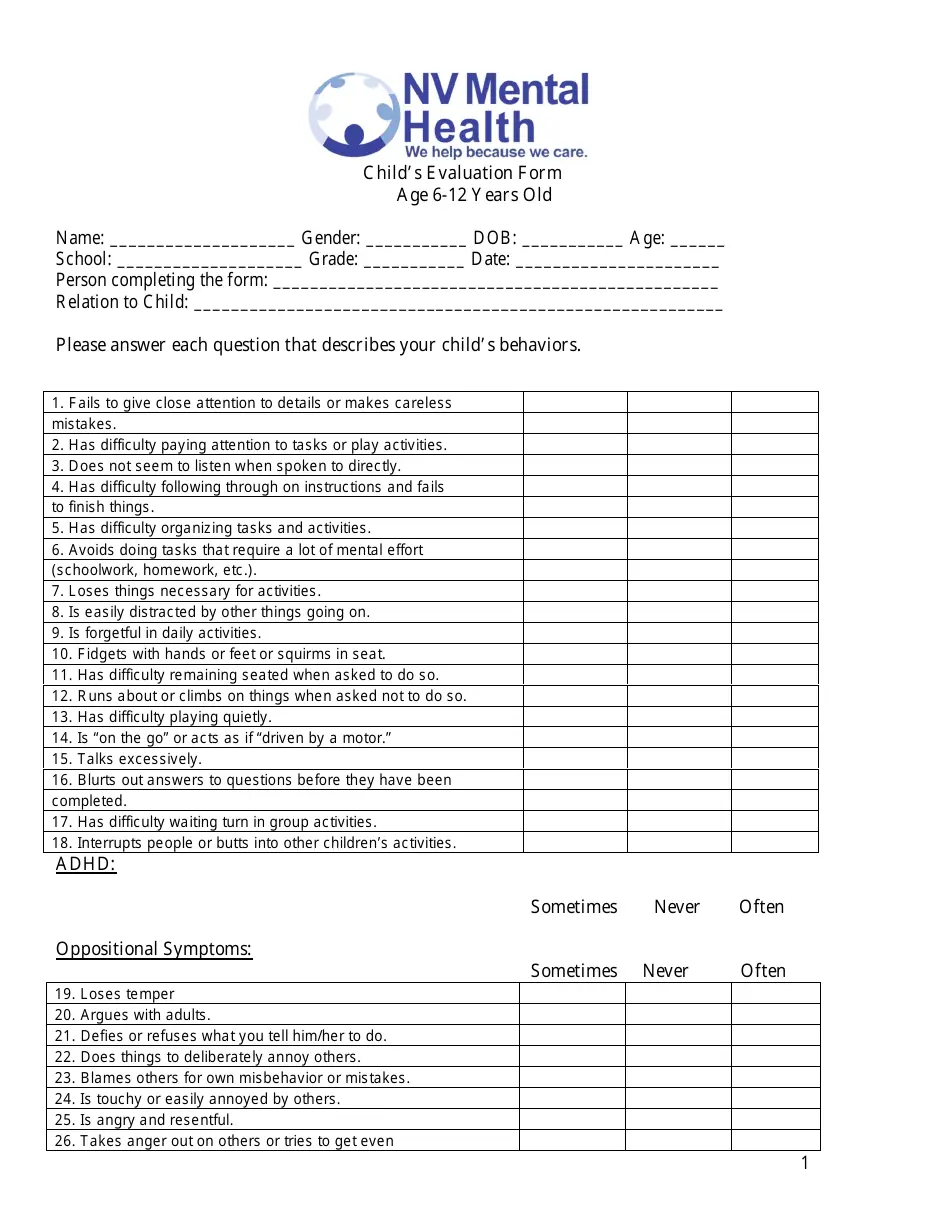
The standard format for reporting chronological age in psychology uses semicolons to separate years, months, and days, written as Y;M;D. A person who is 15 years, 7 months, and 22 days old would have their age recorded as 15;07;22 on official test protocols. This format eliminates ambiguity and ensures consistency across different assessment settings. When psychologists transfer age information from a chronological age calculator to a score sheet, using the correct format prevents transcription errors that could invalidate test results.
Errors in chronological age calculation can have serious consequences in psychological practice. An incorrect age might place a client in the wrong normative group, leading to inflated or deflated scores. For a child on the borderline of a diagnostic category, a scoring error caused by inaccurate age calculation could mean the difference between receiving needed services and being denied support. In forensic psychology, age errors could affect determinations about competency to stand trial or criminal responsibility. In educational psychology, incorrect age might lead to inappropriate grade placement or misidentification of learning disabilities.
Developmental psychologists pay particularly close attention to chronological age because development follows predictable patterns that are tightly linked to age. Jean Piaget’s stages of cognitive development, Erik Erikson’s psychosocial stages, and Lawrence Kohlberg’s moral development stages all specify age ranges during which particular developmental achievements typically occur. When evaluating whether a child has reached a developmental milestone, psychologists must know the exact chronological age to determine whether the child’s performance falls within the expected range or suggests a potential delay.
Neuropsychological assessments also depend heavily on accurate chronological age calculation. Brain function changes with age in predictable ways, and neuropsychological tests have separate norms for different age groups. Tests of memory, attention, executive function, and processing speed all show age-related patterns that must be accounted for when interpreting results. A neuropsychologist evaluating a 68-year-old for possible dementia must compare their performance to other adults in their exact age range, not to a generic “elderly” category. The precision of the chronological age calculator directly affects the validity of these clinical judgments.
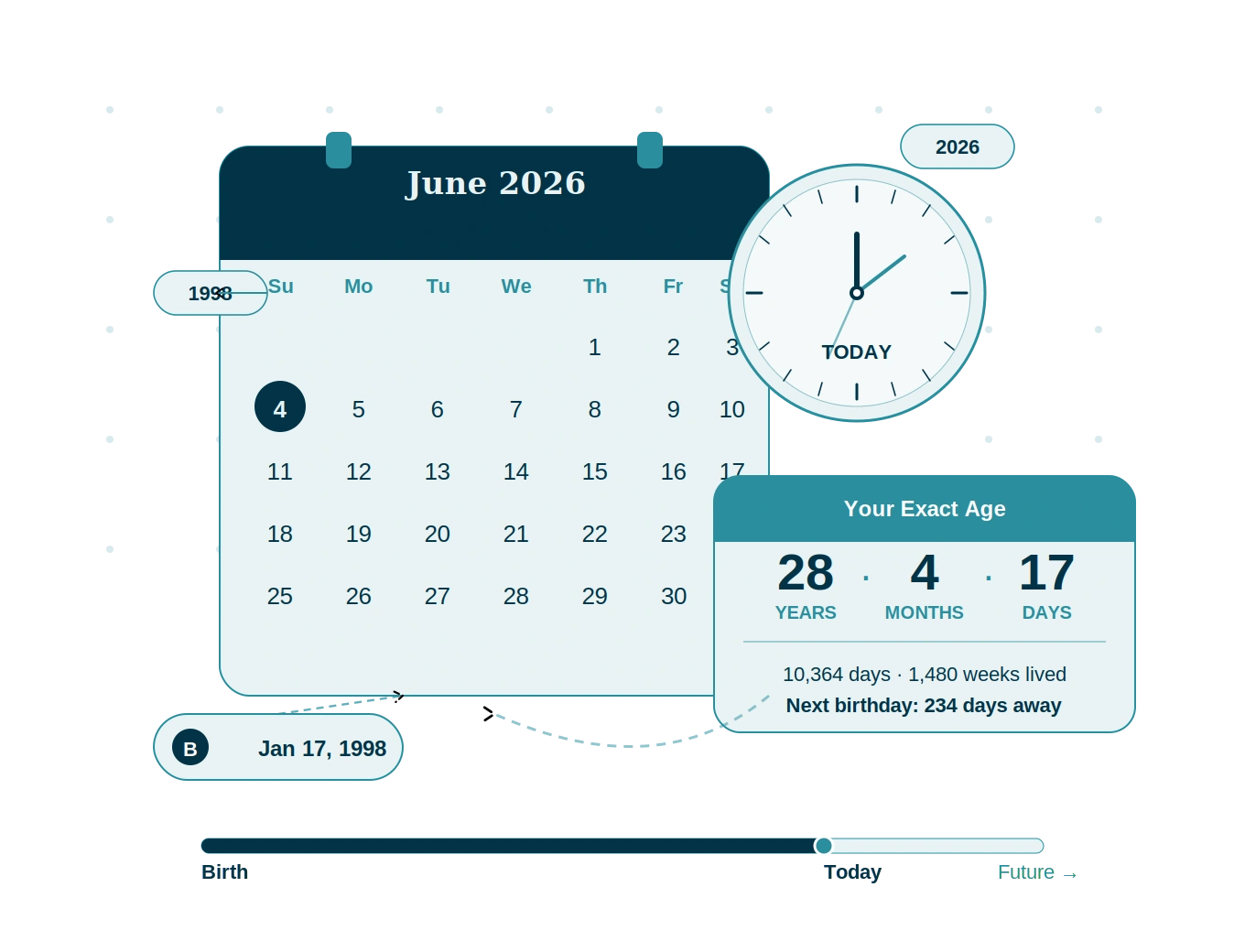
Research psychology relies on chronological age for participant matching and statistical control. In experimental studies, researchers often match participants on age to ensure that groups are comparable. In longitudinal studies, researchers track the same individuals across time, using chronological age to organize data collection waves and analyze developmental trajectories. Even small age discrepancies between comparison groups can introduce confounding variables that obscure true effects. Rigorous age calculation is therefore a hallmark of high-quality psychological research.
The process of calculating chronological age for psychological assessments follows the same calendar subtraction method used in other fields, but the stakes are particularly high. Psychologists must account for leap years, month length variations, and date format differences between countries. Some assessments require age to be calculated to the nearest month, while others demand precision to the exact day. Test manuals specify the required level of precision, and psychologists must follow these guidelines exactly to maintain the validity of their assessments.
Technology has greatly improved the accuracy of chronological age calculation in psychology. Software-based chronological age calculators eliminate manual calculation errors and can be integrated directly into electronic health records and assessment platforms. Some systems automatically pull birth dates from patient databases and calculate age at the moment of testing, reducing the risk of data entry errors. However, psychologists must still verify that their tools handle calendar complexities correctly and produce results in the formats required by specific test publishers.
Cross-cultural considerations add another layer of complexity to chronological age in psychology. Different cultures have varying attitudes toward age, with some emphasizing respect for elders while others prioritize youth. These cultural frameworks can influence how test-takers respond to age-related questions and how psychologists interpret results. A psychologist working with immigrants or refugees may need to verify chronological age through multiple sources, as birth records may be incomplete or unavailable from the country of origin.
Training programs for psychologists emphasize the importance of accurate chronological age calculation from the earliest stages of professional education. Graduate students learn to calculate age manually before transitioning to digital tools, ensuring they understand the underlying principles. Continuing education programs update practicing psychologists on new tools and standards for age calculation. This emphasis on foundational skills reflects the profession’s commitment to measurement accuracy and assessment validity.
The future of chronological age in psychology may see increased integration with biological age measures. As biological age testing becomes more accessible, psychologists may begin to consider both chronological age and biological age when interpreting assessment results. A client whose biological age significantly exceeds their chronological age may warrant different clinical attention than someone whose biological age matches their years. This dual-age approach could enhance the precision of psychological interventions and improve outcomes for clients across the lifespan, representing an exciting frontier in personalized psychological care.
In conclusion, chronological age in psychology is not merely a demographic variable but a critical psychometric parameter that affects the validity of assessments, the accuracy of diagnoses, and the appropriateness of interventions. Whether conducting a single clinical evaluation or a large-scale research study, psychologists must prioritize precise age calculation. Using a reliable chronological age calculator and understanding the principles behind the calculation ensures that every psychological assessment rests on a solid foundation of accurate age information.