Are you searching for a reliable way to grow your hard-earned money without exposing it to market risks? A CD calculator is the indispensable financial tool that every smart saver needs in their arsenal. In today’s unpredictable economic climate, understanding how to leverage a CD calculator effectively can transform your savings strategy from mediocre to exceptional. Whether you are planning for a major purchase, building an emergency fund, or simply looking for better returns than your regular savings account offers, a CD calculator provides the clarity and precision you need to make confident financial decisions in 2026.
A CD calculator helps you determine exactly how much interest you will earn on your certificate of deposit investment based on three critical variables: your initial deposit amount, the term length, and the annual percentage yield (APY). By entering these values into a trustworthy CD calculator, you can instantly project your total returns at maturity and compare multiple CD options side by side. This eliminates guesswork and empowers you to select the certificate of deposit that aligns perfectly with your financial timeline and goals.
What Exactly Is a Certificate of Deposit?
A certificate of deposit, commonly abbreviated as CD, is a time deposit offered by banks and credit unions that pays a fixed interest rate over a predetermined period. Unlike standard savings accounts that allow unlimited withdrawals, CDs require you to keep your money deposited for the entire term, which can range from as short as one month to as long as ten years or more. In exchange for this commitment, financial institutions reward CD holders with significantly higher interest rates compared to regular savings or checking accounts.
When you open a CD, you enter into a contractual agreement with the bank. You agree to deposit a specific sum of money for a fixed duration, and the bank guarantees a fixed interest rate for that entire period. This means your returns are completely predictable and shielded from the volatility of stock markets or bond fluctuations. For conservative investors who prioritize capital preservation and guaranteed income, CDs represent one of the safest investment vehicles available.
How a CD Calculator Works: The Math Behind the Magic
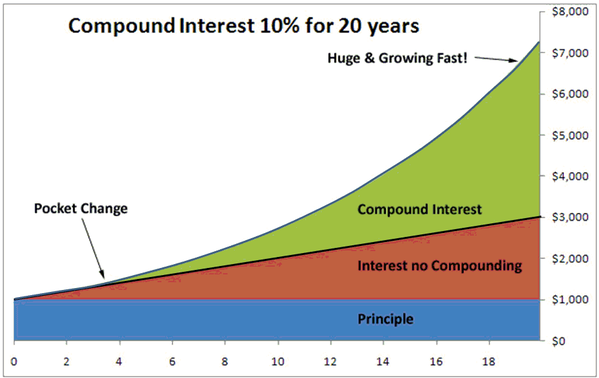
A CD calculator operates by applying the compound interest formula to your specific inputs. The fundamental equation that powers every reliable CD calculator is:
A = P × (1 + r/n)^(nt)
Where:
-
A = Final amount at maturity
-
P = Principal deposit (your initial investment)
-
r = Annual interest rate (in decimal form)
-
n = Number of compounding periods per year
-
t = Term length in years
Understanding this formula helps you appreciate why a CD calculator is so valuable. Most CD calculator tools available online feature intuitive interfaces where you simply input your deposit amount, select your desired term, and enter the APY. The CD calculator then instantly computes your total interest earned and final balance. Advanced CD calculator platforms may also factor in tax implications, inflation adjustments, and early withdrawal penalties.
Why Every Saver Should Use a CD Calculator Before Investing
Using a CD calculator before committing your funds to a certificate of deposit is one of the most intelligent financial habits you can develop. A CD calculator enables you to compare multiple scenarios rapidly. For instance, you can determine how much more you would earn with a 5-year CD versus a 1-year CD, or visualize how different APYs impact your total returns over time. This comparative analysis is nearly impossible to perform accurately in your head, which makes a CD calculator absolutely essential.
Furthermore, a CD calculator helps you establish realistic and achievable savings goals. If you know you need $15,000 for a home down payment in four years, you can use a CD calculator to work backwards and determine precisely how much you need to deposit today. This reverse-engineering approach transforms vague aspirations into concrete, actionable savings plans.
💡 Pro Tip: Always check the compounding frequency when evaluating CD offers. Daily compounding yields slightly more than monthly compounding, which in turn outperforms annual compounding. A sophisticated CD calculator will account for this variable.
Key Factors That Influence Your CD Returns
Several critical variables determine how much money you will make with a certificate of deposit. Mastering these factors will help you use a CD calculator more effectively.
1. Initial Deposit Amount
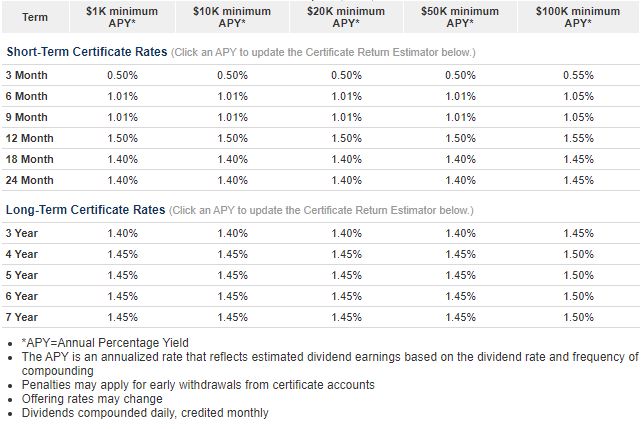
The larger your principal, the more interest you accumulate. Most CD calculator tools make it effortless to adjust your deposit amount and observe the impact on total returns. Some banks offer tiered rates where higher deposits qualify for premium APYs.
2. CD Term Length
Generally, longer-term CDs offer higher interest rates. A 5-year CD typically pays more than a 1-year CD. However, you must weigh this against the risk of needing your money before maturity, which triggers early withdrawal penalties. Use a CD calculator to model various terms.
3. Annual Percentage Yield (APY)
The APY represents your true annual return after accounting for compounding. A CD calculator uses the APY to compute earnings, so always verify you are entering the APY and not the simple interest rate.
4. Compounding Frequency
Compounding frequency determines how often earned interest gets added to your principal. Daily compounding generates the highest returns, followed by monthly, quarterly, and annual. A comprehensive CD calculator lets you specify this for precise projections.
Step-by-Step Guide to Using a CD Calculator
Follow these proven steps to maximize any CD calculator:
-
Enter Your Deposit Amount: Input your total investment. Most CDs require minimum deposits between $500 and $1,000, though high-yield options may require $5,000+.
-
Select Your Term Length: Choose your lock-in period. Common options include 6 months, 1 year, 18 months, 2 years, 3 years, and 5 years. Test multiple terms in the CD calculator.
-
Input the APY: Enter the annual percentage yield. As of mid-2026, top 1-year CD rates hover around 4.25% to 4.30% APY.
-
Choose Compounding Frequency: Select daily, monthly, quarterly, or annual based on your bank’s terms.
-
Review Your Results: The CD calculator displays total interest earned, final balance, and often a detailed breakdown.
Real-World Example: Calculating Your CD Returns
Let us walk through a practical scenario using a CD calculator. Imagine investing $10,000 in a 2-year CD with 4.50% APY compounded monthly. The CD calculator reveals approximately $927 in interest, bringing your final balance to $10,927.
Now consider a 5-year CD at 4.75% APY. The same CD calculator shows roughly $2,618 in interest for a total of $12,618. The CD calculator makes the trade-off crystal clear: higher returns require longer commitment.
Table
| Deposit | Term | APY | Interest Earned | Total Balance |
|---|---|---|---|---|
| $5,000 | 1 Year | 4.25% | $212.50 | $5,212.50 |
| $10,000 | 1 Year | 4.25% | $425.00 | $10,425.00 |
| $10,000 | 2 Years | 4.50% | $927.00 | $10,927.00 |
| $10,000 | 5 Years | 4.75% | $2,618.00 | $12,618.00 |
Understanding Early Withdrawal Penalties
One crucial aspect any good CD calculator should address is early withdrawal penalties. CDs are designed for full-term holding, and banks impose penalties for premature withdrawals. These typically range from three months to one year of earned interest, depending on term length and bank policy.
Before finalizing your decision with a CD calculator, always review penalty terms. Some banks offer no-penalty CDs at lower rates. A CD calculator with penalty estimation shows exactly what you would sacrifice if emergency access became necessary.
⚠️ Important: If you might need your funds before maturity, consider shorter-term CDs or high-yield savings accounts. Use a CD calculator to compare opportunity costs.
CD Laddering: A Strategy for Flexibility and Yield
CD laddering involves opening multiple CDs with staggered maturity dates. This strategy provides regular liquidity while capturing higher long-term rates. You can use a CD calculator to model laddering by calculating returns for several CDs with different terms.
For example, divide $15,000 into three $5,000 CDs with 1-year, 2-year, and 3-year terms. As each matures, reinvest into a new 3-year CD. Eventually, a CD matures every year, giving you liquidity while maintaining exposure to premium rates. A CD calculator is perfect for optimizing this configuration.
Tax Considerations for CD Investors
Interest earned on CDs is taxable as ordinary income in the year earned, even without withdrawal. You will receive a 1099-INT if interest exceeds $10 annually. Some advanced CD calculator tools include tax rate inputs for after-tax return estimates.
Holding CDs within tax-advantaged accounts like IRAs defers taxes until withdrawal. Always consult a tax professional and use a comprehensive CD calculator that factors in taxes.
Where to Find the Best CD Rates in 2026
The best CD rates rarely come from the biggest banks. As of July 2026, the national average 1-year CD APY is approximately 1.65%, while top online banks and credit unions offer rates exceeding 4.00%. Shopping around is essential, and a CD calculator quantifies the difference between mediocre and market-leading rates.
Online banks typically lead because lower overhead costs translate to better depositor yields. Credit unions also compete aggressively, though membership requirements may apply. Use a CD calculator to compare identical deposits across institutions.
Conclusion: Start Using a CD Calculator Today
A CD calculator is an indispensable tool for anyone serious about safe, predictable wealth growth. By understanding how a CD calculator works and applying its insights, you maximize certificate of deposit returns and achieve savings goals faster. Do not settle for the first rate you encounter. Use a CD calculator to explore scenarios, factor in taxes and penalties, and select the CD perfectly aligned with your timeline and risk tolerance.