The distinction between chronological age vs biological age is one of the most important concepts in modern health and wellness. While many people use these terms interchangeably, they represent fundamentally different measurements of aging that have significant implications for your health, longevity, and quality of life. Understanding the difference between chronological age vs biological age can empower you to take control of your health journey and make informed decisions about your lifestyle.
Chronological age is the simplest and most familiar measure of age. It represents the total number of years, months, and days that have passed since your birth date. Everyone born on the same day shares the same chronological age, regardless of their health status, physical condition, or lifestyle choices. Chronological age is fixed, objective, and unchangeable. It is the number you write on forms, celebrate on birthdays, and use for legal purposes such as voting eligibility, driving licenses, and retirement benefits. A chronological age calculator determines this number precisely by measuring the time elapsed between your birth date and any given reference date.
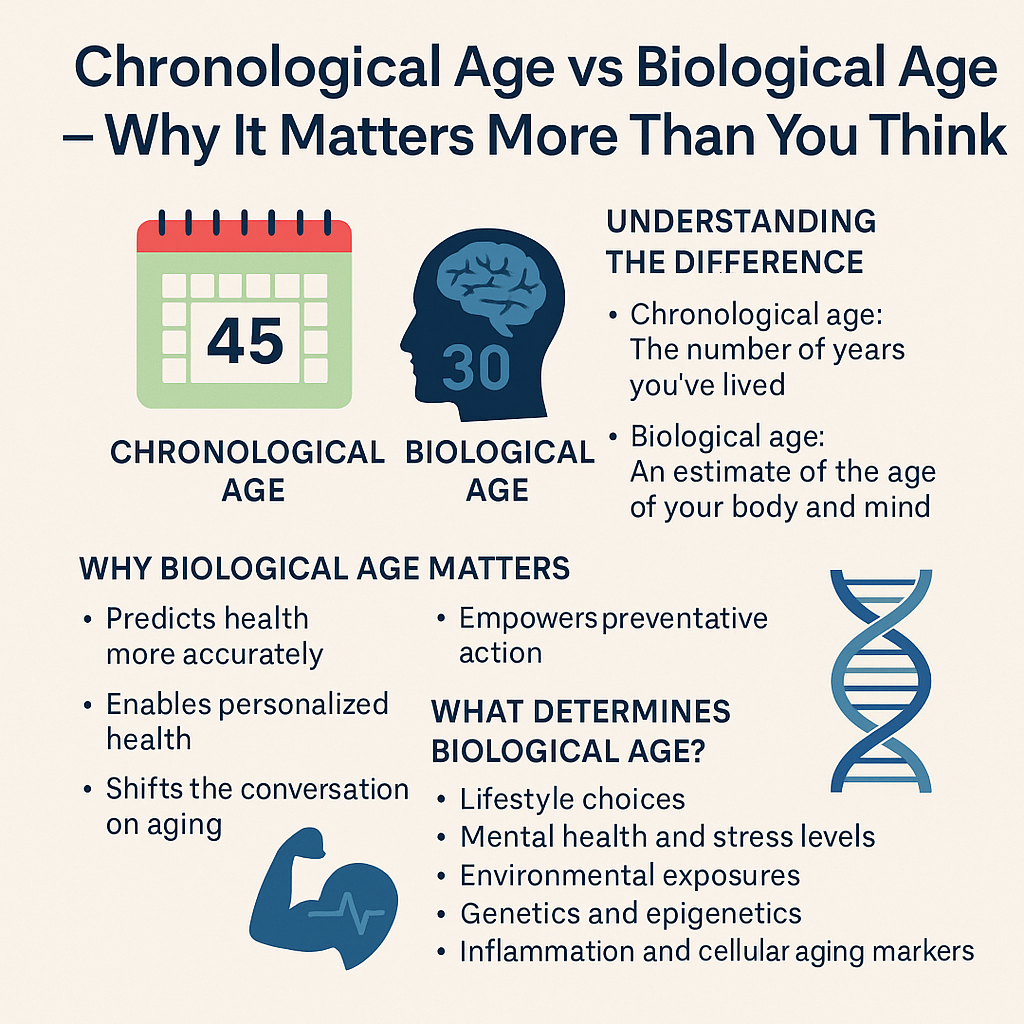
Biological age, in contrast, measures how old your body actually is at the cellular and functional level. Unlike chronological age, biological age is not fixed. It reflects the cumulative impact of genetics, lifestyle choices, environmental exposures, and overall health on your body’s systems. Two people with the same chronological age can have dramatically different biological ages. One person might have the cardiovascular health of someone ten years younger, while another might show signs of accelerated aging due to chronic stress, poor diet, or lack of exercise.
Researchers have identified several key biomarkers that help estimate biological age. Telomere length is one of the most studied indicators. Telomeres are protective caps at the ends of your chromosomes that shorten each time a cell divides. Shorter telomeres are associated with faster aging and increased risk of age-related diseases. Epigenetic clocks, which measure DNA methylation patterns at specific sites in your genome, provide another powerful tool for estimating biological age. Blood-based biomarkers including inflammation markers, cholesterol levels, glucose tolerance, and kidney function also contribute to biological age assessments.
The factors that influence your biological age are largely within your control. Regular physical activity is one of the most effective ways to slow biological aging. Exercise improves cardiovascular health, maintains muscle mass, reduces inflammation, and supports cognitive function. Diet also plays a crucial role, with nutrient-dense foods rich in antioxidants, healthy fats, and fiber helping to protect cells from damage. Quality sleep allows your body to repair itself, while chronic sleep deprivation accelerates aging processes. Stress management, social connections, and avoiding harmful habits like smoking and excessive alcohol consumption all contribute to maintaining a younger biological age.
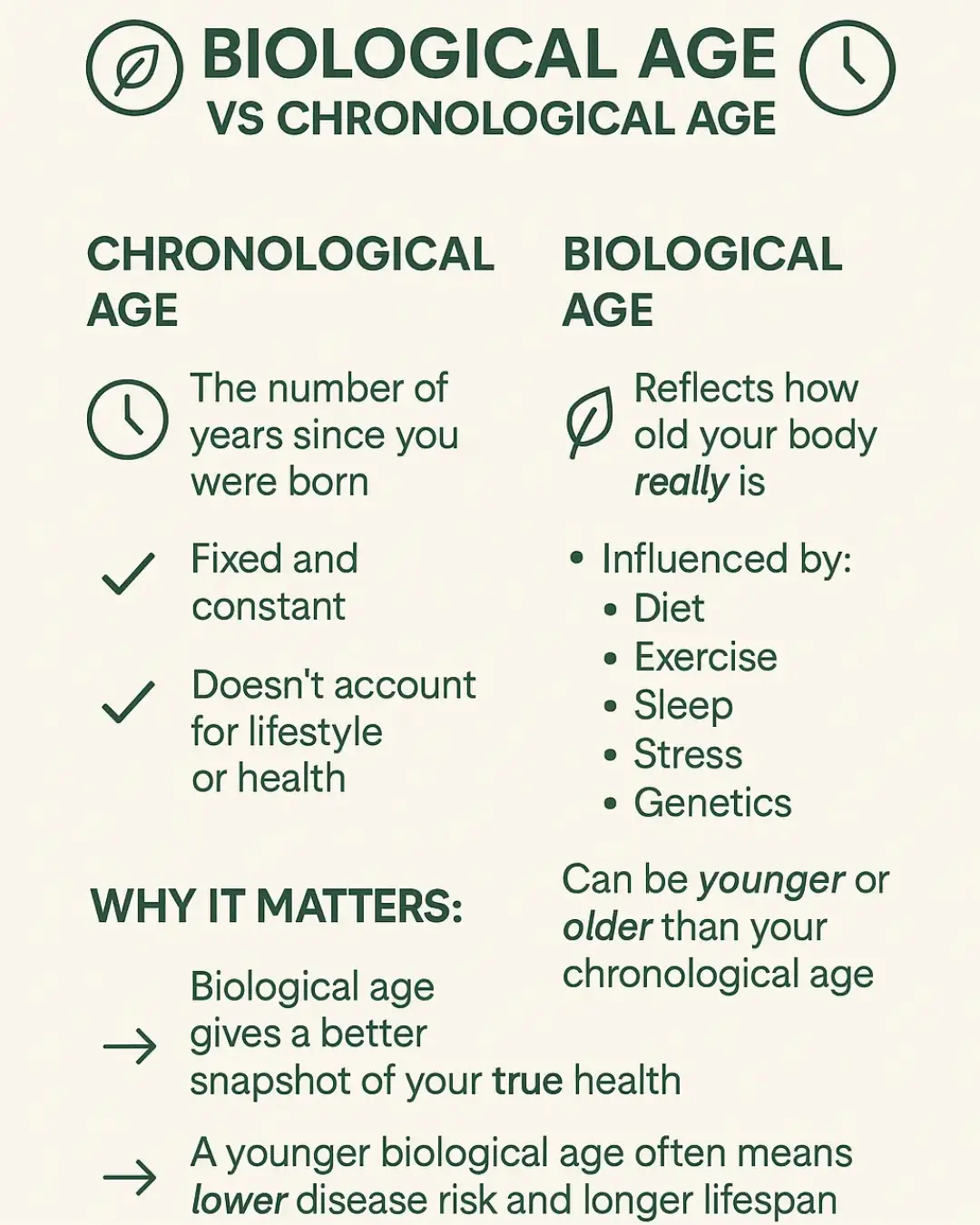
The gap between chronological age vs biological age has real-world health consequences. Research consistently shows that people with a biological age lower than their chronological age have reduced risks of heart disease, type 2 diabetes, cognitive decline, and premature mortality. Conversely, those whose biological age exceeds their chronological age face elevated health risks regardless of how many birthdays they have celebrated. This is why healthcare providers increasingly emphasize lifestyle interventions that target biological aging rather than simply treating symptoms as they appear.
Understanding your biological age requires specialized testing that goes beyond a simple chronological age calculator. DNA methylation tests, telomere length assays, and comprehensive blood panels can provide estimates of biological age, though these tests vary in accuracy and accessibility. Some advanced platforms combine multiple biomarkers into a single biological age estimate, offering a more complete picture of your body’s aging status. While these tests can be expensive, they provide valuable information for individuals serious about optimizing their healthspan.
The practical implications of the chronological age vs biological age distinction are profound. For individuals, this knowledge shifts the focus from simply surviving longer to thriving throughout your lifespan. Instead of accepting decline as an inevitable part of getting older, you can take active steps to slow your biological clock. For healthcare systems, recognizing biological age allows for more personalized and preventative care, targeting interventions to those whose bodies are aging faster than their years would suggest.
Emerging research in biological age measurement continues to refine our understanding of how the body ages. Scientists are developing new epigenetic clocks that can estimate biological age from a single blood sample with increasing accuracy. These advanced tools may eventually make biological age testing as routine as cholesterol screening. As the science matures, the gap between what a chronological age calculator tells you and what your body reveals may become a standard part of annual health checkups.
Public health campaigns increasingly emphasize the modifiable nature of biological age. Unlike chronological age, which cannot be changed, biological age responds to lifestyle interventions. Smoking cessation, weight loss, regular exercise, and stress reduction have all been shown to reduce biological age in clinical studies. This message of empowerment resonates with people who want to take control of their health rather than passively accepting the aging process.
The economic implications of biological age research are substantial. Insurance companies are exploring biological age data to set premiums and design wellness incentives. Employers interested in workforce health may offer biological age testing as part of corporate wellness programs. Pharmaceutical companies are developing drugs that target biological aging pathways, potentially extending healthspan and reducing age-related healthcare costs. These developments could transform how society thinks about aging, retirement, and healthcare planning, making the distinction between chronological age vs biological age increasingly relevant for public policy.
In conclusion, while chronological age measures the time you have been alive, biological age reveals how well your body has aged during that time. The chronological age calculator will always give you the same number, but your biological age is a dynamic measure that responds to your daily choices. By prioritizing healthy habits and regular monitoring, you can work to ensure that your biological age remains as young as possible, maximizing both your lifespan and your healthspan for years to come.